

.png)
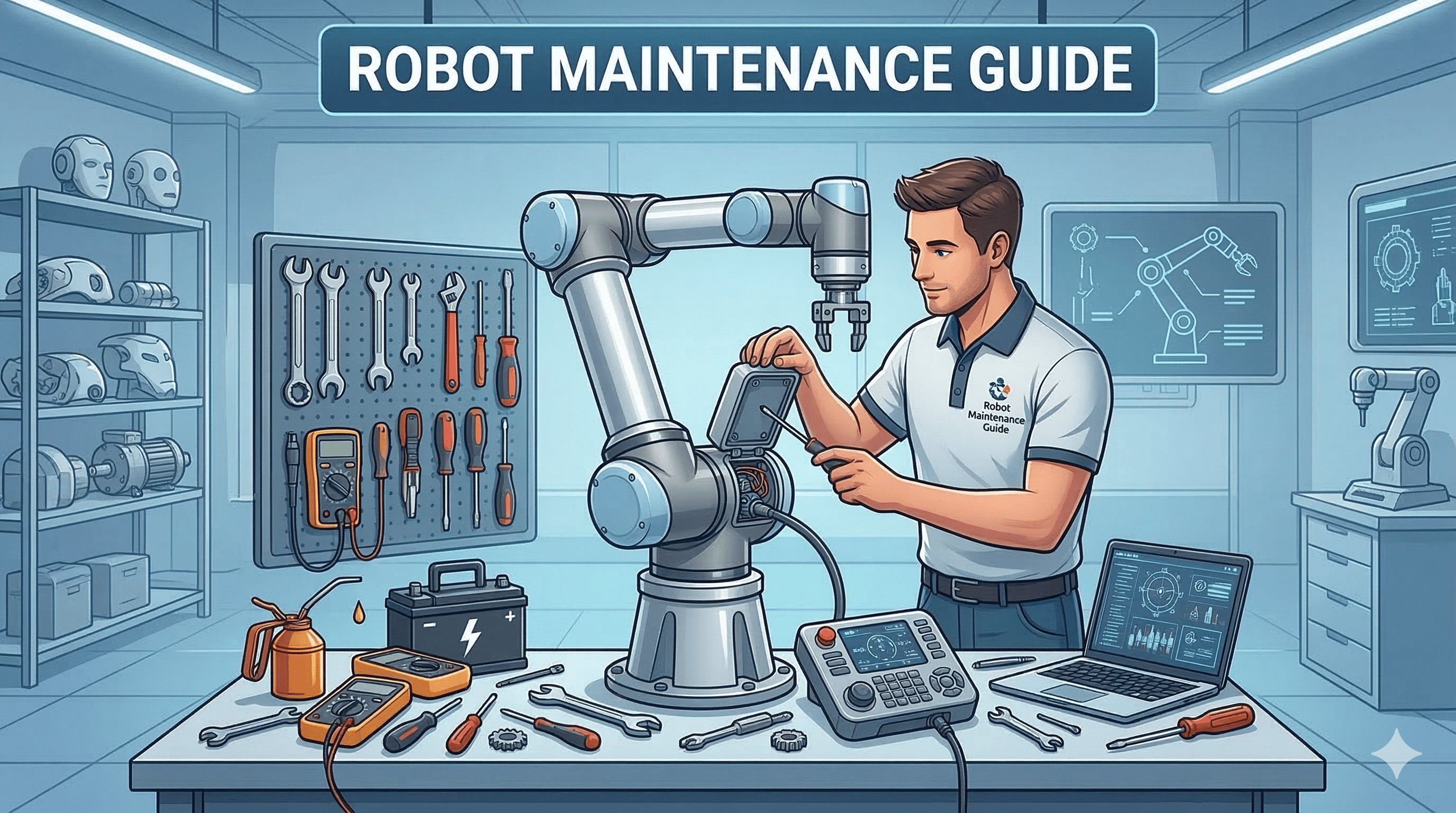
Robot maintenance is the systematic inspection, cleaning, and repair of automated industrial systems. Implementing structured, proactive maintenance strategies helps manufacturers eliminate costly downtime and ensure peak performance.
This critical process ensures all mechanical and electrical components function properly at all times. The positive impact of proper upkeep on overall operational efficiency and workplace safety cannot be overstated.
Regular servicing prevents catastrophic failures and drastically extends the physical lifespan of your expensive capital equipment. Well maintained industrial robots operate faster and consistently produce higher quality outputs.
This comprehensive guide provides a complete roadmap for protecting your long term automation investments. We cover the primary maintenance categories, key monitoring systems, optimal scheduling matrices, and the latest emerging technologies.
Facilities must choose the right approach to keep their automation running reliably across multiple shifts. There are three primary ways to handle robotic equipment upkeep.
Understanding the differences between these methods is vital for operational success. Each operational strategy offers distinctly different levels of financial investment and risk.
Preventive maintenance involves scheduled tasks designed to keep equipment running smoothly. The primary goal is to replace worn components before they fail completely.
This strategy relies heavily on consistent timeframes and accurate usage metrics. It significantly reduces the chances of unexpected production halts on the factory floor.
Predictive maintenance uses advanced sensors to continuously monitor equipment conditions. Required technologies include vibration analysis tools, acoustic sensors, and thermal imaging cameras.
By analyzing this data, operators can pinpoint exactly when a part will degrade. This highly efficient approach maximizes part life and minimizes unnecessary manual interventions.
Reactive maintenance means fixing components only after they have physically broken down. This strategy carries severe risks and often leads to catastrophic system failures.
Hidden costs include halted production lines and expensive expedited shipping fees for spare parts. Relying heavily on this outdated method will drastically reduce overall operational efficiency.
Industrial robots are complex machines with dozens of interconnected parts. Proper monitoring requires a deep understanding of these distinct internal subsystems.
Mechanical components endure the highest levels of physical stress during daily operation. Regular scheduled checks prevent excessive wear and damaging friction.
Technicians must service specific lubrication points based on strict manufacturer frequency guidelines. Proper greasing prevents robotic joints from seizing during high speed movements.
Vital inspection areas include major robotic joints, drive gears, and load bearing mechanisms. Catching mechanical degradation early prevents expensive rebuilds and extended downtime.
The electrical cabinet acts as the central brain of the entire robotic cell. Overheating and poor electrical connections are primary culprits for sudden system failures.
Cable management systems require frequent wear checks to prevent broken internal wires. Continuous flexing easily degrades heavy wiring harnesses over time.
Controller ventilation, air filtering, and active cooling fans must remain completely clear of dust. Overheating processing units will automatically trigger unexpected emergency stops.
The EOAT interacts directly with the product and sustains significant mechanical abuse. Maintenance procedures vary wildly based on the specific tooling type deployed.
Vacuum cups and mechanical grippers have specific wear points requiring daily visual attention. Technicians must perform precise connection and sensor verifications to ensure accurate part handling.
Digital software components are just as critical as the physical hardware itself. Data loss can easily shut down an entire facility for several days.
Routine program backup procedures guarantee rapid operational recovery after a control module failure. Implementing strict firmware update protocols protects the system from known bugs and security vulnerabilities.
Creating a structured timeline is essential for keeping robots in peak operational condition. Implementing strict schedules protects your valuable hardware from premature wear.
Operators must balance daily checks with long term systemic overhauls. Following this precise matrix ensures no critical component is ever neglected.
A daily inspection checklist helps operators catch obvious physical damage before production begins. These quick visual audits take only minutes but save hours of unexpected downtime.
Monthly maintenance tasks involve light exterior cleaning and basic fluid top offs. This routine schedule ensures the machine stays perfectly calibrated and runs smoothly.
Quarterly and bi-annual deep dives require technicians to deeply inspect hidden internal parts. These rigorous sessions prevent slow mechanical degradation from affecting final product quality.
Annual system overhauls are intensive processes requiring carefully planned factory production stops. Teams replace aging batteries, flush all gearboxes, and comprehensively test emergency safety circuits.
Even well intentioned maintenance programs can fail if teams make crucial errors. Avoiding these common mistakes is absolutely vital for long term automation success.
Lubrication errors are incredibly common in fast paced manufacturing environments. Both over-lubrication and under-lubrication can completely destroy a precise robotic gearbox in weeks.
Ignoring environmental hazards is another major cause of premature equipment failure. Exposing delicate components to excessive airborne dust, aggressive moisture, or extreme temperatures degrades them rapidly.
Inadequate documentation of maintenance history makes future system troubleshooting nearly impossible. Without detailed digital records, technicians cannot identify recurring issues or accurately track component lifecycles.
Using untrained personnel for complex maintenance tasks almost always results in damaged hardware. Only fully certified robotic technicians should adjust internal mechanical tolerances or alter safety programs.
Partnering with industry experts can streamline your entire factory maintenance strategy. Lean integrators apply specialized industrial methodologies to maximize your overall equipment value.
The lean approach to robot maintenance focuses exclusively on eliminating wasteful operational practices. It prioritizes highly efficient workflows and removes unnecessary steps from daily routines.
Lean integrators eliminate waste in maintenance workflows by utilizing smart diagnostic software. They ensure technicians spend their time actually fixing problems rather than searching for them.
Strategies for optimizing and right-sizing spare parts inventory prevent unnecessary capital expenditure. Integrators analyze historical failure data to stock only the most critical replacement components locally.
Applying continuous improvement, known as Kaizen, to robotic cell upkeep ensures evolving efficiency. Teams regularly review their maintenance metrics to continuously refine their daily inspection processes.
There are massive financial benefits of partnering with a lean integrator for standardizing procedures. Expert guidance ensures every technician performs tasks identically, heavily reducing the risk of human error.
The future of industrial equipment upkeep relies heavily on advanced digital connectivity. Modern software tools are completely transforming how smart factories manage their robotic assets.
The integration of IoT for real time condition monitoring is the foundation of modern maintenance. Networked factory sensors stream constant operational data regarding temperature, vibration, and energy consumption.
This instant feedback allows facility managers to react to sudden anomalies before they cause a shutdown. Cloud platforms instantly alert remote technicians whenever a robot deviates from its normal parameters.
AI-driven predictive analytics parse massive historical datasets to forecast exact hardware failure dates. These intelligent algorithms learn from past operational trends to optimize lubrication schedules automatically.
Digital twins provide a complete, highly accurate virtual replica of the physical robotic cell. Engineers can safely simulate dangerous maintenance procedures on the digital twin before touching the actual hardware.
The critical necessity of structured, proactive maintenance cannot be ignored by competitive manufacturers. Regular preventative care directly correlates with higher daily production yields and fewer workplace safety incidents.
Maximizing your overall robotic ROI through sustained upkeep requires dedication and the right technological tools. By embracing smart scheduling matrices and lean principles, your automation will consistently deliver profitable results.

.png)
.png)